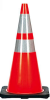

A traffic cone (also known as a safety cone, road cone, or pylone) is a cone-shaped marker, usually made from brightly colored, flexible plastic, used to temporarily redirect traffic, signal hazards, or demarcate safe areas in road work zones, parking lots, and pedestrian spaces.
Key Characteristics & Design
Shape:
Conical. This shape makes it highly visible, stable (when weighted), and likely to fall over rather than cause damage if hit by a vehicle.
Color:
Fluorescent orange (most common worldwide), yellow, red, or lime green for high visibility. They often have reflective white or silver stripes (collars) for night-time visibility.
Material:
Typically PVC or thermoplastic for flexibility and durability.
Sizes:
Small (12-18 inches):
For indoor use, pedestrian control, marking small hazards.
Medium (28-36 inches):
The standard for roadways and lane closures.
Large (42+ inches):
For high-speed highways, providing greater visibility.
Primary Functions & Uses
Traffic Control:
Temporarily closing lanes, creating detours, or channeling traffic during construction or accidents.
Safety & Hazard Marking:
Alerting drivers to road hazards like potholes, debris, or wet floors. Marking the boundaries of work zones to protect crews.
Parking Management:
Reserving spaces, cordoning off areas, or directing flow in lots.
Pedestrian Management:
Creating safe walkways during events, guiding queues, or marking off-limits areas.
Sports & Training:
Often used as makeshift goal posts, agility markers, or boundary cones in sports drills.
In essence, the traffic cone is a masterpiece of simple, effective design—a silent, non-verbal communicator that plays a vital role in public safety and urban management.