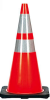
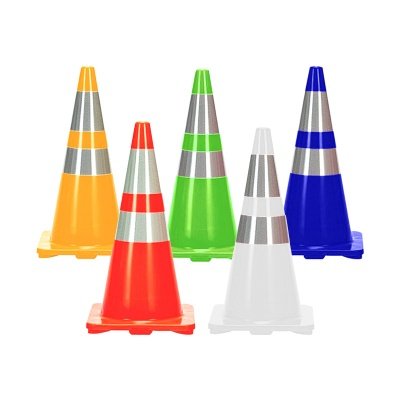
Traffic cones, also called road cones, highway cones, safety cones, caution cones, channelizing devices, construction cones, roadworks cones, or pylons. Traffic cones are placed on road to temporarily to redirect traffic, block of hazards, separation for construction project, road maintenance and automobile accidents. Traffic cones typical color is fluorescent orange. Traffic cones usually have a retroreflective stripe to increase their visibility.
Traffic cone common raw materials
Rubber traffic cones is made from recycled rubber. Rubber traffic cone adopts compression molding manufacturing process.
2.PE traffic cone
PE traffic cone is made from polyethylene raw material, also called LDPE. PE traffic cone main manufacturing processes are injection molding, blow molding, or rotational molding.
PVC traffic cone is made from polyvinyl chloride raw material. PVC traffic cone main manufacturing processes are injection molding or blow molding.
Rubber traffic cone advantages
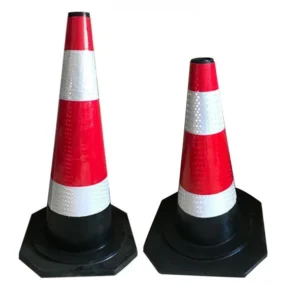
1. Thanks to recycled rubber raw material, rubber traffic cones can completely bounce back after being run over by heavy equipment or vehicles without deformation and damage.
2. Rubber traffic cones are more suitable for roads with heavy traffic volume and can withstand harsh weather conditions including heavy storms, torrential rains and blizzards.
3. Rubber traffic cone stays strong and bends in extreme temperatures.
PE traffic cone advantages
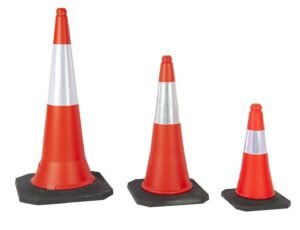
1. PE material traffic cone handles strong sunlight very well. In hot regions such as the Middle East, Southeast Asia, and Africa, PE cones maintain color stability under intense UV exposure.
2. PE road cones feel lighter and easier to carry. Workers transport them quickly during short-term projects or parking management.
3. PE traffic cones usually cost less because the material and production process remain simpler.
PVC traffic cone advantage
1. PVC traffic cone has bright fluorescent orange color body and high visibility reflective stripes, making traffic cones easier to be seen at night.
2. PVC traffic cone has excellent flexibility performance, traffic body can recover in original shape swiftly after being run over by vehicles.
3. PVC traffic cone can add heavy duty black base to enhance the wind resistance.
4. PVC cones also resist UV well, especially with UV stabilizers added during production. high-quality PVC cones perform strongly in both hot and cold climates.
5.PVC traffic cone has good durability and long lifespan.
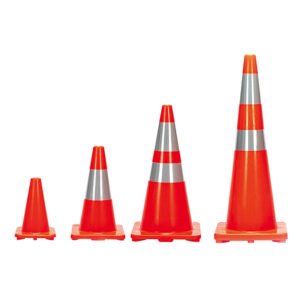
Traffic safety cones play a vital and far-reaching role in road traffic guidance, serving as an indispensable marking facility for traffic diversion and warning. Designed to separation driving lanes, isolate construction zones and alert drivers to potential road hazards, they are widely adopted in urban roads, highway maintenance and temporary traffic control scenarios.
In summary, how to choose traffic cones depends on climate, traffic conditions, project duration, and budget.